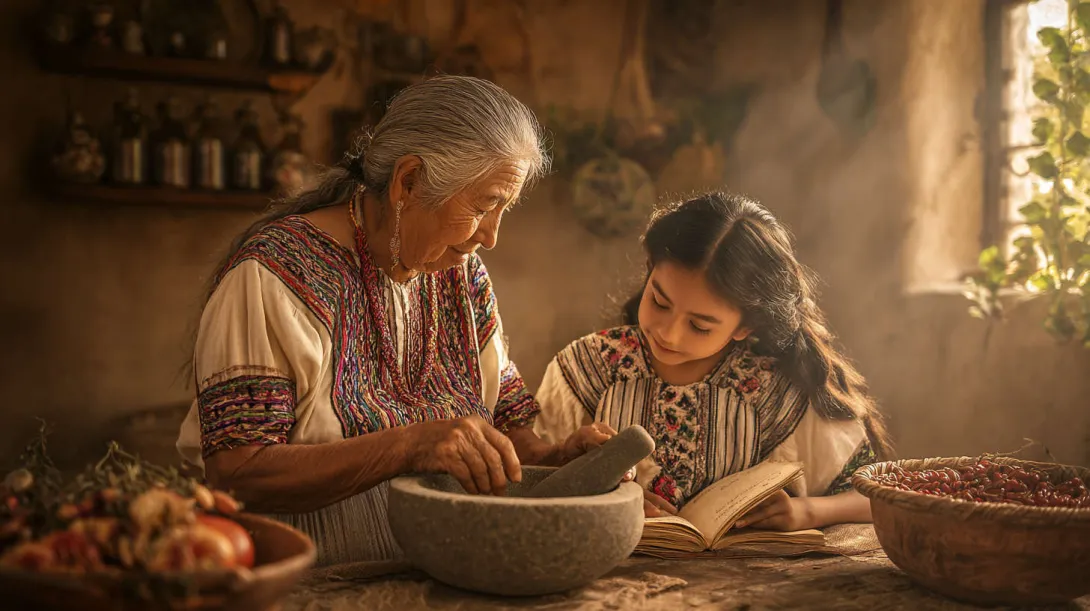
For most of human history, food was local.
Communities ate what their landscapes could provide. Climate, soil, seasonal plants, local animals, fermentation techniques, and generations of accumulated knowledge all shaped regional dietary traditions. These eating patterns were never designed in laboratories, yet they evolved alongside human populations over centuries.
Today, something different is happening.
Whether you walk into a supermarket in Europe, Asia, or South America, the shelves often look surprisingly similar. Ultra-processed products produced by a relatively small number of global food systems are replacing many traditional ingredients and recipes. At first glance, this may seem like a cultural shift. Increasingly, however, researchers are asking whether it is also a biological one.
That question has become important enough to inspire initiatives such as the World Diet Initiative, which aims to document traditional dietary patterns before they disappear. The goal is not simply to preserve culinary heritage. Scientists also hope to understand what these diverse ways of eating may reveal about human biology, metabolism, immunity, and the gut microbiome.
Your Gut Is More Like a Forest Than a Laboratory
The gut microbiome is often described as a collection of bacteria. While technically correct, that description can make it feel static, almost mechanical.
A more useful way to imagine it may be as a forest.
Healthy forests contain countless species performing different roles. Some trees create shade. Others stabilize the soil. Birds, fungi, insects, and plants form an interconnected ecosystem where diversity contributes to resilience.
The gut appears to function in a similar way.
Different microorganisms specialize in breaking down different dietary fibers, polyphenols, resistant starches, and other plant compounds. No single food supports every microbial species equally. Instead, different foods provide different ecological opportunities within this internal ecosystem.
When dietary diversity declines, the ecosystem may become less diverse as well.
This does not necessarily mean immediate illness. Rather, research increasingly suggests that richer microbial diversity is generally associated with greater ecological stability and metabolic flexibility. Much like a forest, an ecosystem with many different participants may be better equipped to adapt to changing conditions than one dominated by only a few species.
The Search for the "Perfect Diet"
Nutrition discussions often revolve around finding the single best eating pattern.
Should it be Mediterranean?
Plant-based?
Low carbohydrate?
High protein?
These questions are understandable, but they may overlook another important dimension.
Rather than asking which single diet is perfect, researchers are increasingly exploring whether the range of foods we eat deserves more attention than strict adherence to one nutritional philosophy.
Different plants contain different fibers, phytochemicals, and bioactive compounds. These compounds become potential resources for different members of the gut microbiome. A plate containing legumes, herbs, berries, mushrooms, whole grains, nuts, seeds, and vegetables introduces a broader spectrum of nutrients than repeatedly eating the same handful of foods.
This perspective shifts the conversation.
Instead of chasing perfection, we may benefit from expanding variety.
That approach is also practical. It does not require abandoning a preferred dietary pattern. Mediterranean, vegetarian, omnivorous, or other balanced eating styles can all become more diverse by gradually introducing a wider selection of minimally processed plant foods.
Nature Rarely Depends on One Choice
One of the simplest metaphors comes from nature itself.
A bee does not spend its entire day visiting a single flower.
It moves from flower to flower, gathering different resources along the way.
Evolution often favors diversity because diversity creates resilience.
Humans evolved in environments where food sources naturally changed across seasons and landscapes. Our nutritional history has rarely been one of endless repetition. That does not mean every traditional diet was optimal, nor does it suggest that modern foods are inherently harmful. It simply reminds us that biological systems have developed in the presence of variation rather than uniformity.
A Different Question
Perhaps the future of nutrition is not about discovering one universal diet for everyone.
Perhaps it begins with asking a different question:
How diverse is the food on our plate?
That question is simple enough to guide everyday choices, yet it also reflects one of the broader directions emerging in modern nutrition science. As researchers continue to investigate disappearing traditional diets and the ecosystems living within us, dietary diversity may prove to be one of the most valuable concepts we already have.
Scientific basis
This article is based on concepts discussed in recent research and scientific reviews on the World Diet Initiative, disappearing heritage diets, dietary diversity, gut microbiome ecology, microbiome resilience, and the relationship between plant diversity and microbial diversity.